A Review of Nectar in a Sieve by Kamala Markandaya
Becoming India...

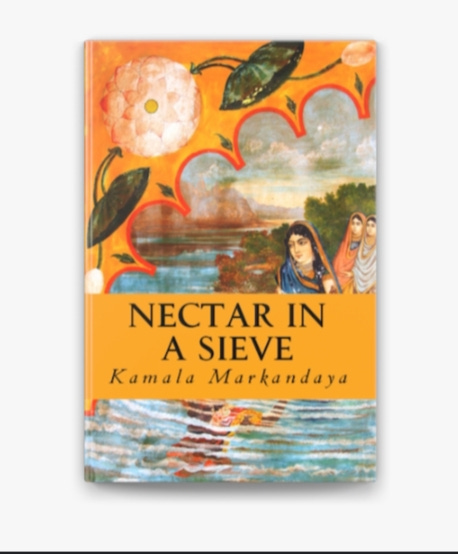
Genres: Fiction, Classics, India, Historical Fiction, Read For School, Indian Literature
A little moment for History class before review time:
The Industrial Revolution which spanned from 1750-1840 had as its kickoff country Great Britain. This movement indicated a shift from manual labour to the usage of pieces of machinery for production. The former thrived for a period but had the following setbacks; the unredeemable time cost during production, the slow pace of production, and the low outreach of arrived supplies. The latter has not only survived for a longer period, but as the economist says will go on forever. There are four stages to the inception of the Industrial Revolution. First, it was Coal (1765), Gas (1876), Electronics & Nuclear (1969), and lastly, Internet & Renewable Energy (2000-date). Apart from the need to increase supply income, the major reason why the Industrial Revolution became a household movement was the abundance of the three factors of production:
Land
Labour
Capitalism
“ The Industrial Revolution entered India in 1854 when Bombay opened its first steam-powered cotton mill in Asia. Initially, the growth was slow, and the expansion of these modernised cotton mills was not done until the 1870s and 1880s. India now has the world's sixth-largest economy.”
My Review
This week, I made an unusual turn on this Classic and Historical Fiction— Nectar in a Sieve —which features India, but, in its becoming. I chose this novel based on one criterion: its title. It just felt like... more. I mean it announces there is more to come, which is the thing with every book, but its announcement struck differently. At the end of this mini review, you are going to know 'why'.
*
Set in India during the period of the rural-urban industrial revolution, the unraveling events of life in India are told through a first-person narration of a voice belonging to Rukmani—the book's protagonist.
Through her life and telling, readers see inwardly into the lives of other Indians —named and unnamed— experiencing this change. They go through denial, poverty, illness, famine, and death which is induced by starvation, violence, and oppression.
When readers dive into the pages of Nectar in a Sieve, they'd be privy to the balance and imbalance of the Industrial Revolution as it weighed on India and its citizenry. For the main character Rukmani, it's losing her husband and two sons, to violence, ill health, and starvation.
The portrayal of the Indian cultural order and her early regard for its women is also evident on pages as one reads on. For example, Rukmani's daughter, Irawaddy gets all the blame for the childlessness experienced during her short unhappy marriage. However, she later conceived and bore a son.
Circling back to the title and its struck effect. I got the answer to my 'why' upon finishing. Factually, the title of the novel is taken from the 1825 poem "Work Without Hope", by Samuel Taylor Industrial Revolution. An excerpt from the poem is the epigraph of the novel:
Work without hope draws nectar in a sieve,
And hope without an object cannot live.
However, figuratively, the title is a metaphor aimed at describing Rukmani's feelings and perspective on the change she witnesses in her life and that of surrounding Indians. Rukmani is saying she lives in India which is getting sieved of familarised feelings and objects, leaving it bland, but she's conjured pleasantness for herself because her family, her love, and theirs for her forms nectar (a sweet feeling) in a sieve (new India).
And that's all about this book's best bit. Grab a for your reading.
See you in my next newsletter!
My Rating ⭐⭐⭐⭐
Publishing Year: 1954
Publishers: Mass Market Paperback